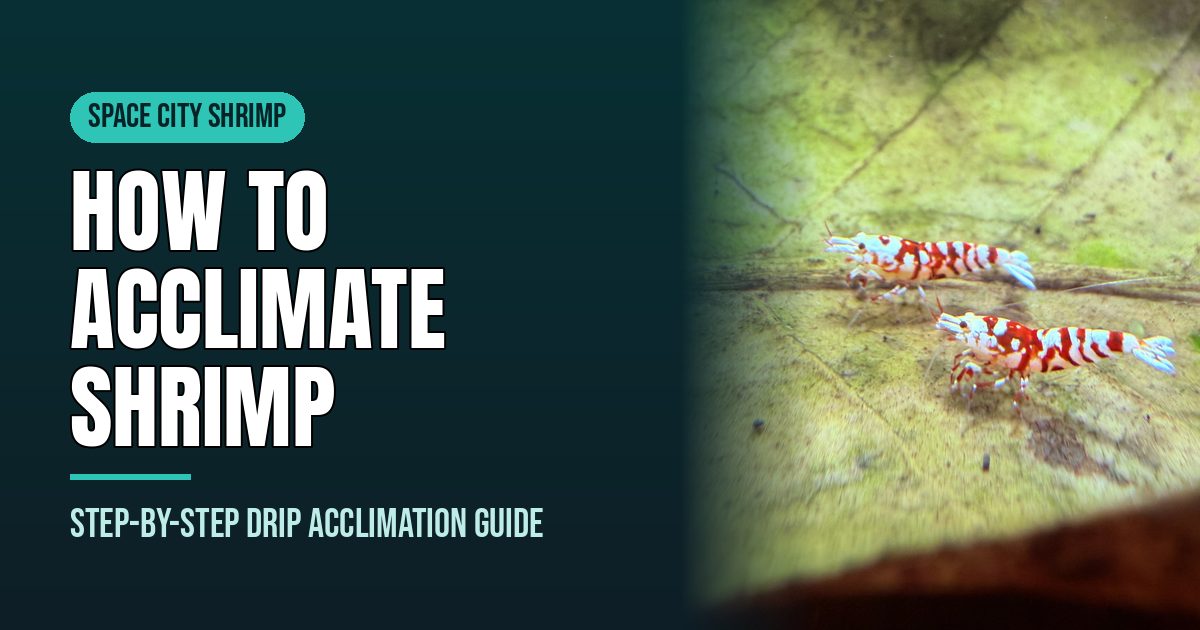

How to Acclimate Shrimp: Drip Acclimation Guide
Your shrimp have arrived. The next couple of hours matter a lot for how they settle in.
Shrimp are tougher than they look, but sudden changes in water chemistry hit them harder than most fish. This guide covers exactly what we recommend when your Space City Shrimp box shows up, from the moment you sign for it until your shrimp are grazing in their new tank.
Why Acclimation Matters
Your shrimp have spent a day or more in our water, sealed in a bag. Your tank water is almost certainly different. Moving them over gradually closes that gap without shocking them.
Three differences matter most:
Temperature
Temperature changes the fastest, and shipping disrupts it more than anything else. A bag that sat in a cool truck or a warm porch needs time to match your tank before anything else happens.
TDS and Hardness
TDS (total dissolved solids) and GH (general hardness) affect how shrimp molt. A big, sudden jump in TDS is one of the most common causes of failed molts and losses in the first week. This matters most for Caridina, which live in soft water.
pH
Shipping water often drifts in pH, and waste builds up in the bag during transit. Ammonia is less harmful at lower pH, so as soon as the bag is opened and the water starts mixing, the clock is ticking. That’s why we recommend a slow, steady drip and not leaving shrimp in shipping water for hours.
New to shrimp water chemistry? Keep an eye on GH, KH, TDS and pH, and test before every big change.
Before Your Box Arrives
A little prep makes acclimation calm and quick.
- Make sure your tank is cycled. Ammonia and nitrite should be 0.
- Test your water so you know your temperature, pH, GH and TDS.
- Gather supplies: a clean container or bucket (never used with soap), airline tubing, an airline valve or clip (a loose knot works too), a small net, and a TDS meter if you have one.
- Plan to be home. We ship Monday through Wednesday so packages don’t sit in a carrier facility over the weekend. Watch your tracking number and be ready to accept the package on the first delivery attempt.
When the Box Arrives: Do This First
📸 Before you open the bags, take clear photos and a video of the unopened bags.
Our Live Arrival Guarantee asks for clear photos and a video of the unopened bag within 1 hour of delivery if anything arrives DOA. It only takes a minute, and if every shrimp is fine, you just delete it.
Then:
- Open the box somewhere dim and quiet. Shrimp are calmer in low light.
- Turn off your tank lights.
- Check the bags for leaks and look for movement. Some shrimp sit still after shipping. That’s normal, and many perk up once they’re in fresh water.
Step 1: The Float Method (Temperature)
Float the sealed bag in your tank for about 15–20 minutes.
This brings the bag water to your tank’s temperature without mixing in any of your water yet. Keep the lights off while the bag floats.
For many fish, floating plus a few cups of water is the whole process. For shrimp, it’s only the first step.
Step 2: Drip Acclimation, Step by Step
Drip acclimation slowly mixes your tank water into the shipping water so the shrimp adjust to your TDS, GH and pH a little at a time.
- Pour the shrimp and their shipping water gently into your clean container. Tilt the container so the shrimp stay submerged. If the water is shallow, any moss from the bag can go in with them.
- Set up the siphon. Put one end of the airline tubing in your tank (secure it so it doesn’t slip out) and start a siphon into the container, which should sit lower than the tank.
- Slow it to a drip. Use the valve, a clip, or a loose knot to get about 1–2 drips per second.
- Let it run until the water volume doubles, then let it double again. Going by volume is more reliable than going by the clock. For most orders this takes about 1–2 hours.
- Check TDS if you can. When the container reading is close to your tank’s, you’re ready.
- Net the shrimp into the tank. Don’t pour the container water into your tank. It contains shipping waste. Throw it out.
- Keep the lights off for a few hours and skip feeding until the next day.
Tip: Check the container every 20–30 minutes so it doesn’t overflow, and keep it somewhere it won’t get knocked over.
No drip setup? Add a small splash of tank water (about a quarter cup) every 10 minutes until the volume has doubled and doubled again. Same idea, just in steps.
Neocaridina vs. Caridina: What Changes?
Neocaridina (Cherry-Type Shrimp)
Neocaridina like our Bloody Mary, Blue Dream, Yellow 24K, Orange Sunkist, Green Jade and Mixed Color Neocaridina are hardy and tolerate a wider range of conditions.
A drip of about an hour is usually enough if your parameters are close to typical Neocaridina conditions. If your tap water is very soft, they may need extra minerals over time. Some keepers use crushed coral in a filter bag to add hardness.
Caridina (Bee, Taiwan Bee and Tiger Shrimp)
Caridina such as Extreme Blue Bolt, Pure Red Line, BKK Shadow Panda, OE Black Devil and Red Fancy Tiger need soft, acidic, very stable water. They’re usually kept in remineralized RO water over an active buffering substrate.
For these shrimp:
- Drip slowly, toward the longer end (around 2 hours), especially if you don’t know how close your parameters are to ours.
- Watch TDS closely. Matching TDS is the main goal.
- Don’t drag it out too long. Past a few hours, waste in an open container starts working against you. Slower is not always safer.
Acclimating Nano Fish and Snails
Nano Fish
Fish like Galaxy Rasboras (Celestial Pearl Danios), Emerald Rasboras, Fire Ant Tetras and Otocinclus do well with the same float-then-drip method, usually on the shorter end (around 45–60 minutes).
Otocinclus can be sensitive after shipping, so give them a gentle acclimation and a mature tank with biofilm and algae to graze.
Note: Our live arrival guarantee covers fish only when they ship with FedEx 2-Day or UPS 2nd Day Air.
Snails
Poso rabbit snails (also in orange) and the snails in our Cleanup Crew Bundle also benefit from floating and a slow drip. Rabbit snails come from soft water, so take your time, much like you would with Caridina.
Snails sometimes stay closed for a while after arriving. Give them time before assuming the worst. Shrimp and snails are covered by our guarantee on any shipping method.
Common Mistakes to Avoid
- Opening bags before filming them. It can cost you a DOA claim.
- Pouring shipping water into the tank. Always net the shrimp across.
- Dumping shrimp straight in after floating only. Temperature matches, but TDS and pH don’t.
- Dripping too fast. A steady stream isn’t a drip.
- Acclimating for many hours in an open container. Waste builds up.
- Bright lights during and right after acclimation.
- Feeding right away. Wait about 24 hours.
- Adding shrimp to an uncycled tank, or one recently treated with copper-based medications.
- Big water changes in the first week. Let them settle.
If a Shrimp Looks Stressed or Arrives DOA
Signs of Stress
Shrimp that swim frantically, lie on their sides, or sit very pale may be stressed. Some shrimp lose a little color after shipping and regain it within days.
What to do:
- Keep the lights off and the tank quiet.
- Test for ammonia, nitrite, temperature and TDS.
- Add cover. Indian almond leaves and cholla wood give shrimp hiding spots and surfaces to graze.
- Avoid big water changes. Large swings can make stress worse.
If Something Arrives DOA
We pack every order as if we were the ones receiving it, but shipping live animals isn’t perfect. If anything arrives dead:
- Within 1 hour of delivery, take clear photos and a video of the unopened bag.
- Submit our DOA form or email support@spacecityshrimp.com with your order details and media.
Shrimp, snails and plants are covered on any shipping method. Fish are covered when shipped with UPS 2nd Day Air or FedEx 2-Day. Packages must be accepted on the first delivery attempt. Full details are in our Shipping & Return Policy.
FAQ
How long should I drip acclimate shrimp?
Usually 1–2 hours at about 1–2 drips per second, or until the water volume has doubled and doubled again. Neocaridina can be on the shorter end. Caridina do better closer to 2 hours.
Can I acclimate shrimp without drip acclimation?
Yes. Add a quarter cup of tank water every 10 minutes until the volume has roughly quadrupled. It works on the same principle.
Should I put the shipping water in my tank?
No. Net the shrimp across and throw out the container water.
Why are my new shrimp not moving?
Shrimp often sit still after shipping and acclimation. Keep the lights off, leave them alone, and check again the next day. Many become active within a few hours.
When can I feed new shrimp?
Wait about 24 hours, then feed lightly. A mature tank with biofilm gives them plenty to graze in the meantime.
What days do you ship?
We ship Monday through Wednesday, so your shrimp never sit in a carrier facility over the weekend. You’ll get a tracking number by email when your order ships.
Questions about your order or your tank? Email support@spacecityshrimp.com. We’re always happy to help. Ready to stock up? Browse the shop.